Four bolts, no record: the Alaska Airlines 1282 door plug
01What happened
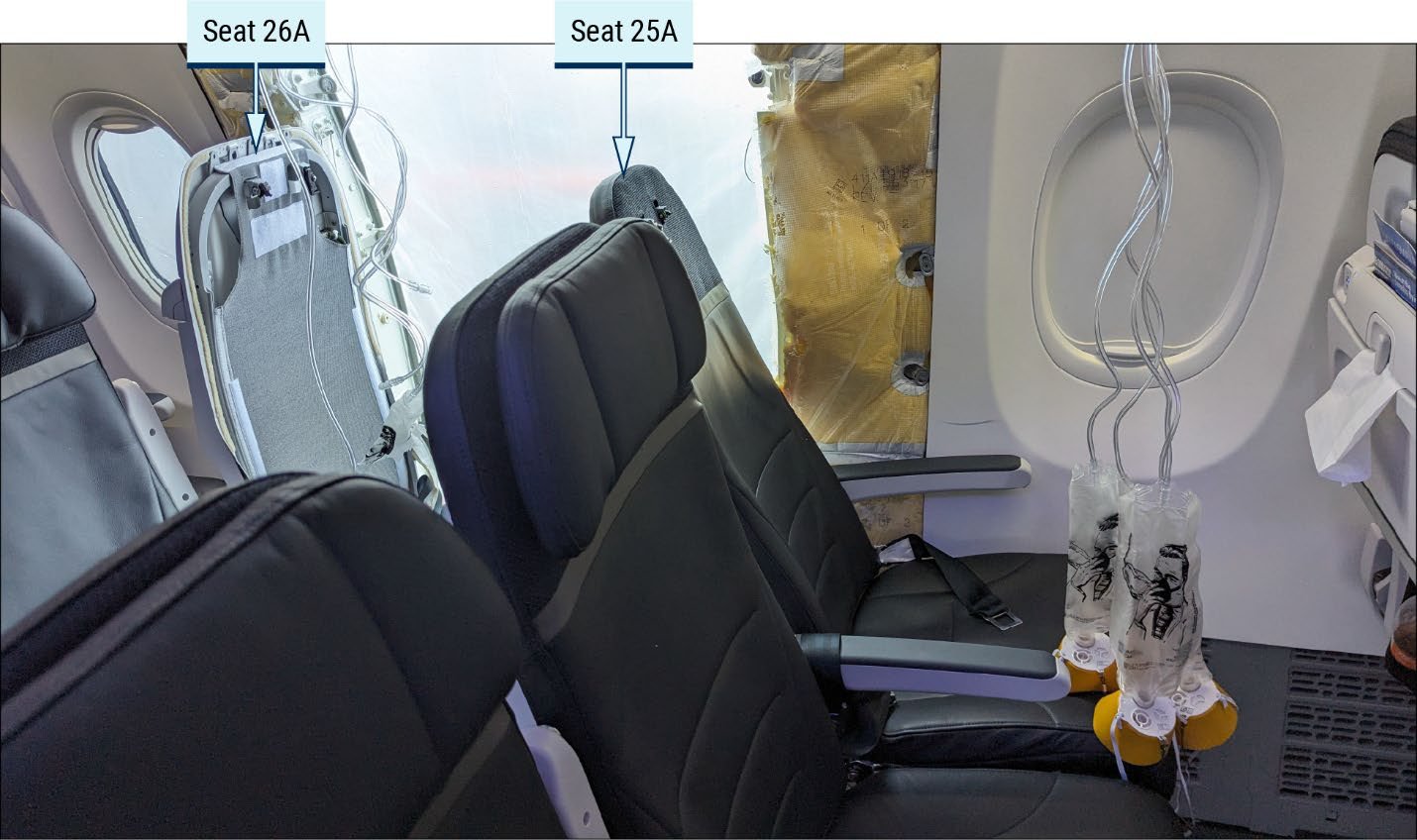
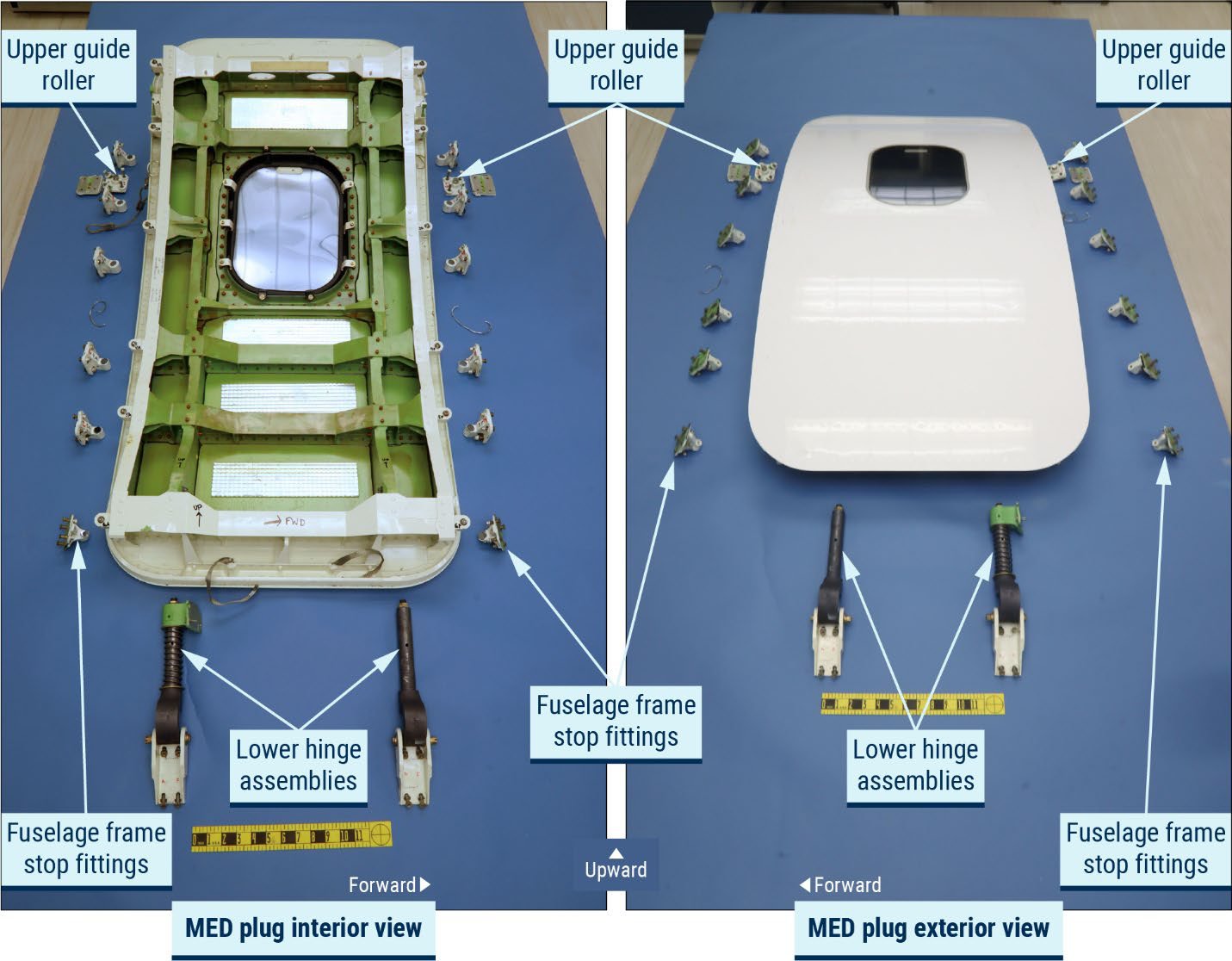
On January 5, 2024, Alaska Airlines flight 1282, a Boeing 737-9 that had been in service for less than two months, was climbing through about 14,830 feet after takeoff from Portland when the left mid exit door plug — a panel roughly 29 inches wide and 59 inches high that fills an unused emergency-exit opening — separated from the airplane. The cabin depressurized rapidly. One flight attendant and seven passengers received minor injuries, and the crew returned to Portland for a safe landing.
The seats beside the opening happened to be empty. The NTSB noted that three lap-held children were on board, and that the potential for severe injury or death existed.
02What the investigation found
The door plug is held against upward movement by four bolts. The NTSB found that all four were missing before the airplane was ever delivered:
- In September 2023, during assembly at Boeing's Renton factory, the plug was opened so that damaged rivets on the adjacent fuselage frame could be reworked. Opening it inherently required removing the four bolts.
- Boeing's own process required a removal record any time a previously accepted installation was disturbed. The record's job was to document what came off and to specify the reinstallation tasks and quality sign-offs needed to restore it.
- No removal record was generated. The plug was then closed without its securing bolts, and, in the NTSB's words, “no quality assurance inspection of the plug closure was performed.”
- Opening a door plug was a nonroutine task. Investigators could not establish who opened or closed it; no one on duty said they knew.
- The airplane was delivered on October 31, 2023. Over the following flights the plug crept upward by fractions of an inch — movement that a routine preflight inspection could not have detected — until it cleared its stop fittings.
The NTSB's probable cause was Boeing's failure to provide the training, guidance, and oversight needed for personnel to consistently comply with its parts removal process, with the FAA's ineffective surveillance contributing. The report also found the parts-removal instruction had a documented history of compliance problems going back at least ten years.
03The inspection gap
Boeing had a quality inspection for exactly this situation. It simply never ran, because it was wired to a piece of paperwork rather than to the airplane. The removal record was both the memory that four bolts were out and the trigger for someone to confirm they went back in. When it wasn't created, the memory and the trigger disappeared together — and from that moment the factory's records described an accepted, finished installation that no longer existed.
That is the general shape of a rework escape: the system only knows what it has been told. A disturbance nobody declares is a disturbance nobody inspects.
How SureSight closes this gap
SureSight ties the record to what the technician's glasses actually see at the workface, instead of to a form someone has to remember to open. Applied to rework on an accepted installation, that changes three things.
The disturbance is logged as it happens. When a technician wearing SureSight opens an installation, the removal is captured as an observed event — which part, which fasteners, when — bound to first-person video. The open item exists because the bolts were seen coming out, not because someone later filled in a record. An installation that has been disturbed stays flagged as open on that airframe until it is verifiably restored.
Closure is verified fastener by fastener. Reinstallation is a short list of observable steps: four bolts, in four known locations, with their retaining hardware. SureSight's computer vision checks each one as it is performed and marks any step it could not confirm. A plug closed with zero of four bolts does not produce a clean record; it produces four unverified steps that the technician, the lead, and quality all see the same shift.
The quality sign-off rests on evidence. The inspector reviewing the closure has timestamped imagery of each bolt location rather than a stamp to countersign. And when nobody can say who did the work — as happened here — the record answers the question in minutes instead of leaving it open after a federal investigation.
The four bolts were missing for more than three months, across delivery and weeks of passenger service. A record built from what was seen at the door plug would have shown the gap before the airplane left the factory.