A finding without follow-through: the Longview tank failure
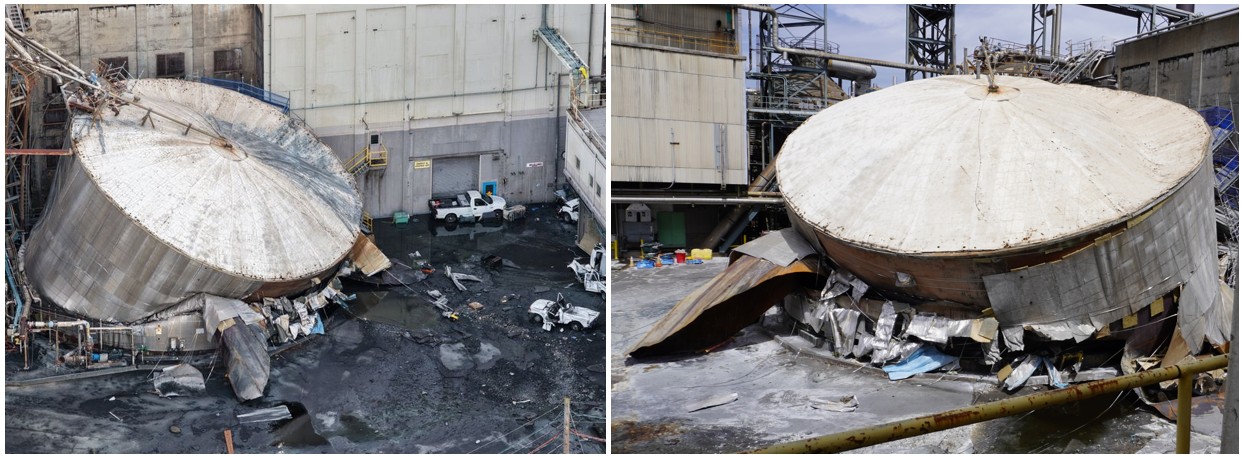
01What happened
Just before 7:15 a.m. on May 26, 2026, a 1.2-million-gallon storage tank (identified by the CSB as "G Tank") holding white liquor — the caustic mixture of sodium hydroxide, sodium sulfide, and sodium carbonate used to break wood down into pulp — catastrophically failed at the Nippon Dynawave Packaging mill in Longview, Washington.
The tank's contents were released in seconds. Eleven workers were killed, all suffering alkaline chemical burns. It was the deadliest workplace incident in Washington State in nearly a century, and the U.S. Chemical Safety Board deployed a full investigation team.
02What the records show
The most sobering fact in this incident is not what was unknown. It is what was known:
- In July 2025 — ten months before the failure — an inspection contractor performed an external inspection of the tank and found significant thinning below the minimum safe thickness in its lower regions.
- The contractor's assessment, cited in records reviewed by federal investigators and reported by OPB and KUOW, deemed the tank “not fit for continued service.”
- The tank remained in service. It was being worked on, and was scheduled for replacement, when it failed.
The inspection worked. The finding was correct. What broke was everything that was supposed to happen next: the interval between "we know this tank is failing" and "this tank is out of service" stretched to ten months, with the vessel still full of hot caustic liquor and people working around it.
03The inspection gap
Industrial safety programs are built to answer two questions: is the equipment sound? and if it isn't, what are we doing about it? This incident shows how the second question fails quietly. A finding gets filed. A replacement gets budgeted and scheduled. Months pass. Meanwhile the degraded vessel keeps operating, and nothing in the daily rhythm of the plant re-surfaces the fact that people are working beside a tank an inspector has already condemned. The paperwork knew. The plant floor, on the morning of May 26, effectively didn't.
How SureSight closes this gap
SureSight's core thesis is that an inspection isn't finished when the box is checked — it's finished when the finding is acted on. That's what a closed-loop, verifiable record means in practice.
Findings that stay visible. When an inspection through SureSight flags a condition, the finding is bound to visual evidence and to the asset itself — not to a PDF in a shared drive. Equipment carrying an open adverse finding stays flagged in every subsequent verified walkdown until the loop is closed, making "condemned but still in service" a status everyone sees, not a fact buried in a contractor report.
Verified interim monitoring. Between a finding and a repair or replacement, degraded equipment demands more eyes, more often. SureSight turns those interim checks into scheduled, verifiable events: computer vision confirms the walkdown actually covered the flagged regions of the asset, and a missed or skipped check is visible the same day — not discoverable only after an incident.
An objective record for the hardest decisions. Keeping a vessel in service after an adverse finding is a risk decision, and risk decisions deserve evidence. SureSight gives operators, safety leaders, and insurers the same first-person visual record of the asset's condition over time — so the conversation about "can this run until the replacement arrives?" happens with current, objective imagery instead of a ten-month-old report.
Sources & further reading
- U.S. Chemical Safety Board — Investigation update, Nippon Dynawave Packaging tank failure
- OPB — Longview chemical tank was called unfit for service before deadly failure
- OPB — Records show ruptured tank was being worked on, scheduled for replacement
- KUOW — Records: ruptured tank at Longview paper mill
- Packaging Dive — Nippon Paper assessing impacts after deadly Washington mill implosion