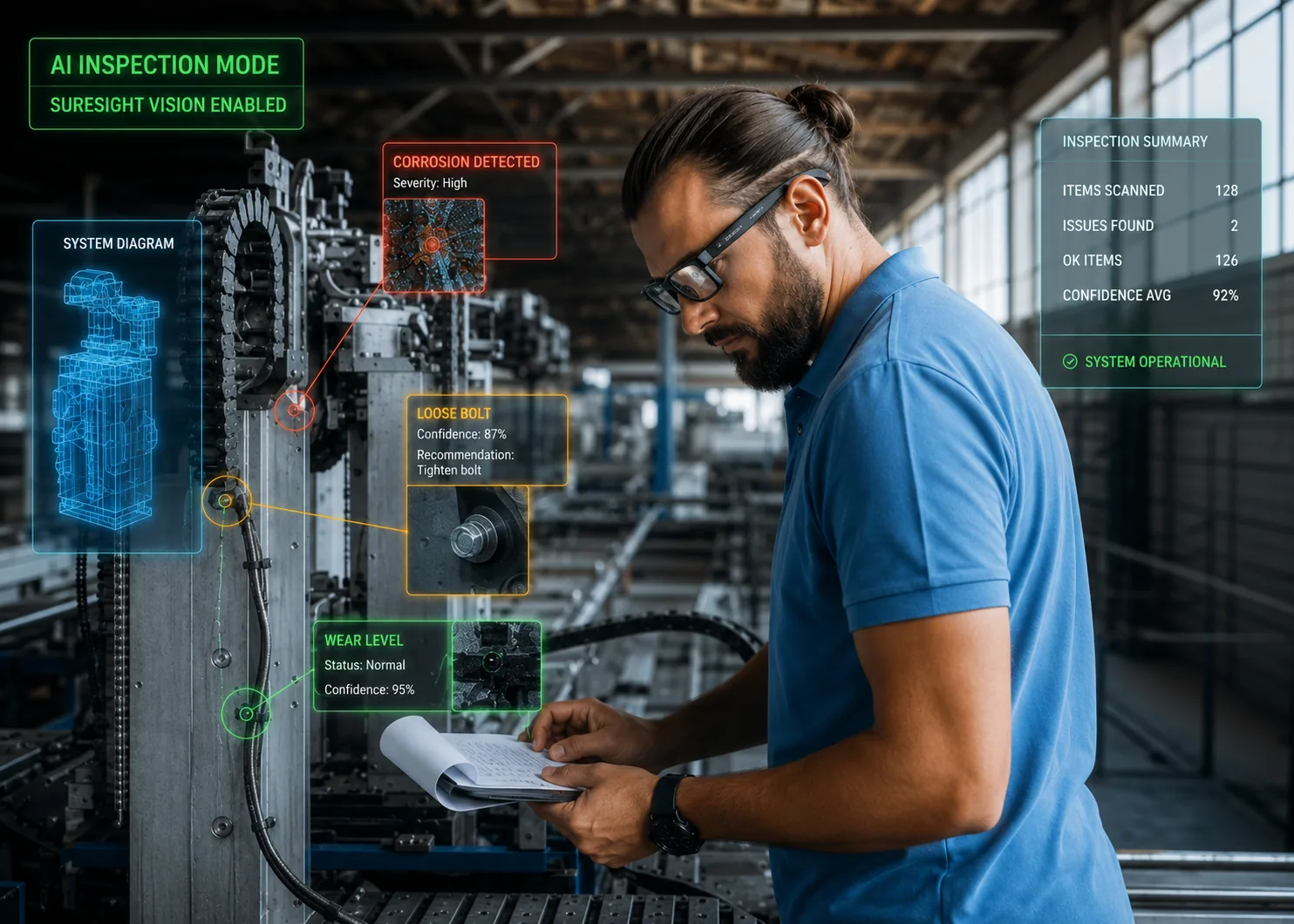
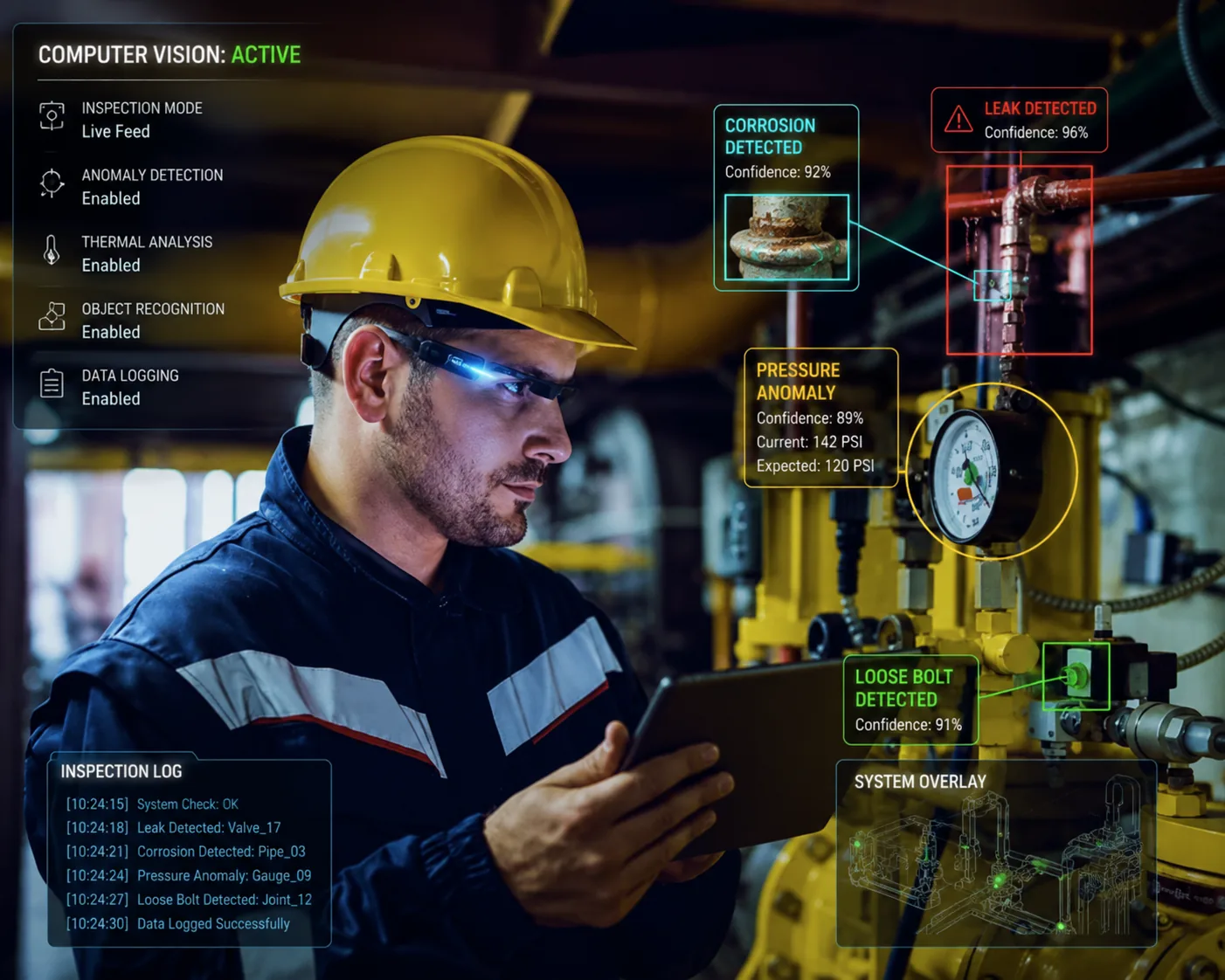
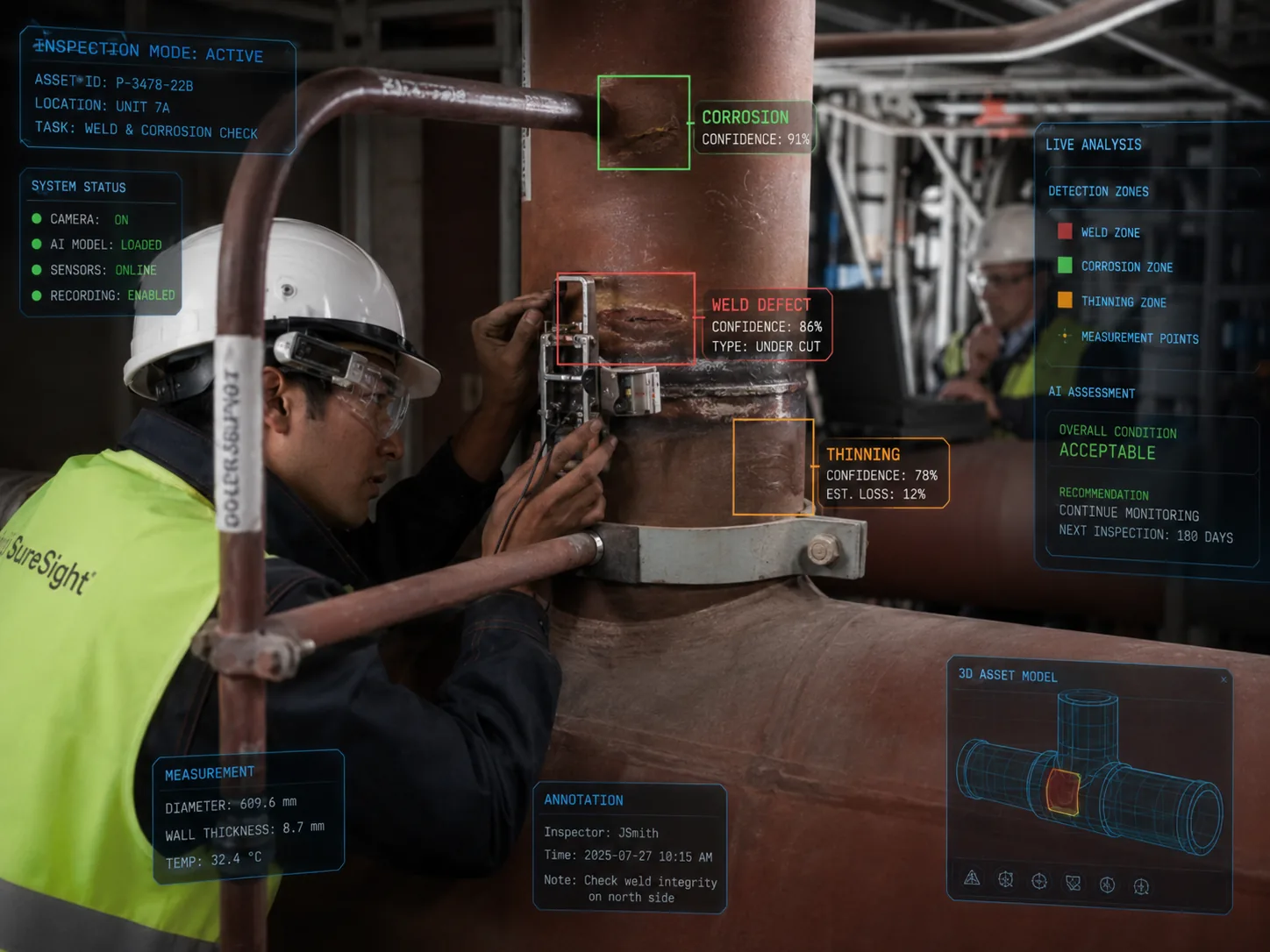
Industrial machinery has increasingly been instrumented with sensors and automated feedback. Many human inspection processes have not. SureSight applies the same feedback principle to inspection itself.
Over decades, industrial machinery has been instrumented with sensors and automated feedback — equipment increasingly reports and corrects its own state. Yet many critical inspections still depend on an inspector observing something and then manually recording that it was done.
Inspection, in other words, is still one of the last open loops in industrial operations. There is no independent measurement of the result — only a person's report that the work happened. SureSight exists to close that loop.
Traditional inspection records usually prove that someone marked a task complete. They do not necessarily provide independent evidence that the required component was actually observed under sufficient conditions.
The output of the inspection is, in effect, self-reported by the same element performing it. Documentation and independent evidence are not the same thing — and most inspection produces only the former. That is the gap SureSight closes.
Early machines ran open-loop: a command produced an action, with no measurement of the result. Engineers closed the loop by adding sensing — measure the result, feed it back, correct the command. SureSight adds that same missing sensing layer to human inspection.
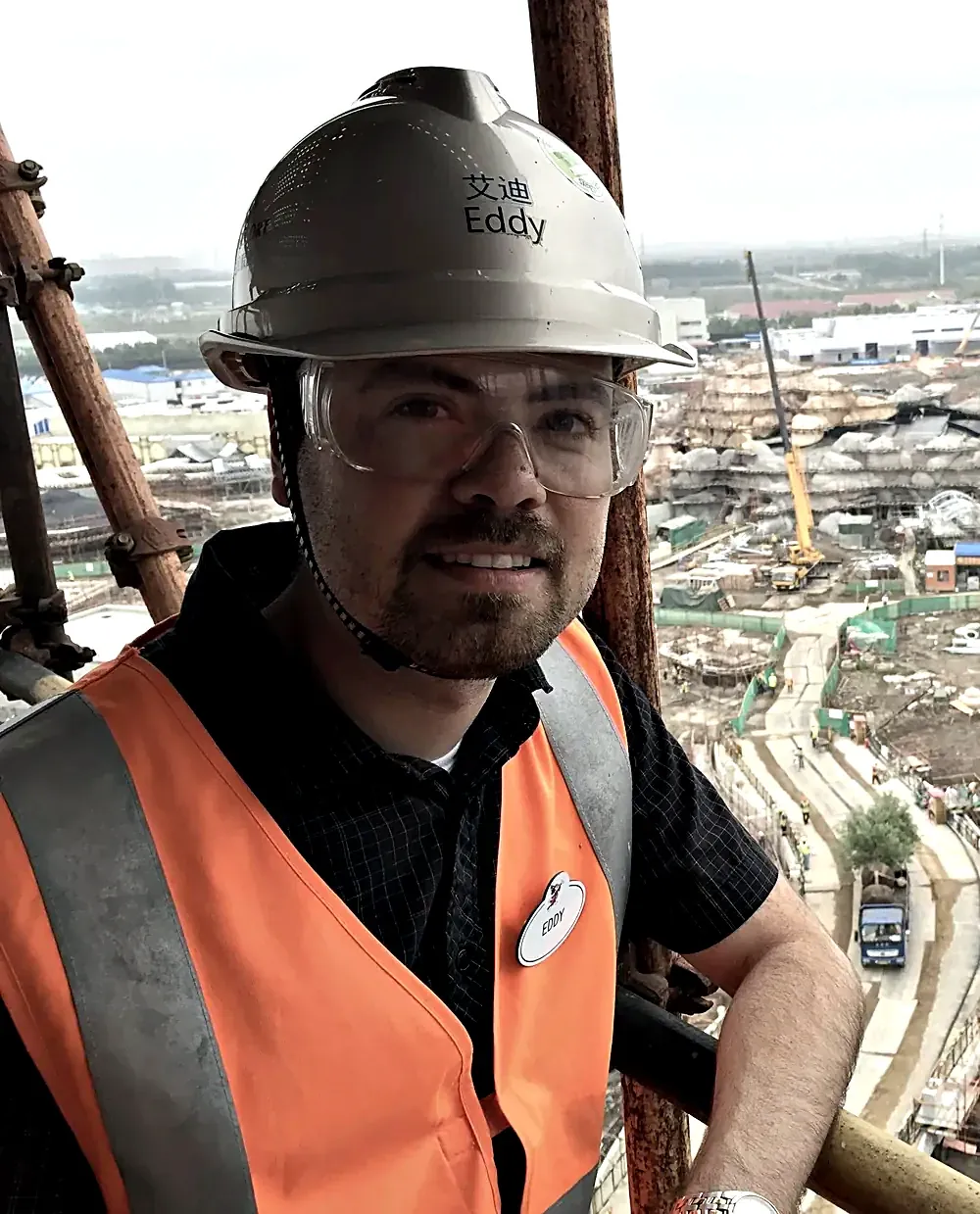
I'm Eddy Castaneda, founder of SureSight — a licensed Professional Engineer with fifteen years on safety-critical and reliability-critical ride systems at organizations including Walt Disney Parks and Resorts and Universal Studios. That work meant leading global projects across Japan, China, and the United States, delivering under a wide range of jurisdictions and safety regimes where complex machinery, maintenance programs, and human inspection all carry real consequences.
I spent those years around machines where sensing, redundancy, fault detection, and feedback are fundamental — systems engineered to measure their own state and correct it. Yet I repeatedly saw inspection itself still depend on a person observing something and checking a box. That mismatch — rigorous feedback everywhere except the inspection record — became the insight behind SureSight: use computer vision as the independent sensing layer inspection never had.
The guiding principle is simple: verification should occur as a natural byproduct of doing the work — not a separate step the inspector has to remember, and not paperwork bolted on afterward. When the act of inspecting also produces the evidence, the record stops being a claim and becomes a measurement.
The rest of our principles follow from it, and show up throughout the product — in the on-prem architecture, optional image retention, confidence scoring, and privacy posture.
Our goal is to make independent verification a normal part of human inspection — just as sensing and feedback became normal parts of machine control.
Closed-loop inspection shouldn't be a premium feature or a special case. Over time, an inspection without an independent feedback layer should look as incomplete as a machine without sensors.
Check, inspect, measure — every routine visual task is now a closed feedback system. No more relying on memory alone. No tablet, no second device, no eyes off the work.
Check
Inspect
Measure